"Most homeowners spend more time researching a holiday than they do finding the person who will redesign the place they live in every day."
Redesigning your home is one of the most significant financial and personal decisions most families make. It requires trust, taste, and communication — usually over several months and several lakhs of rupees. And yet the process of finding the person you're going to hand all of that to is, by most accounts, chaotic.
You ask around. Someone recommends their cousin's friend. You find three Instagram accounts that look promising. You send DMs that go unanswered or lead to conversations that go nowhere. You visit a showroom and get handed a brochure. Weeks pass.
This isn't a personal failing. The system for finding interior designers in India is genuinely broken — and understanding exactly why can help you avoid the most common traps.
There is no trusted,
structured directory.
If you need a doctor, a lawyer, or a chartered accountant, there are professional bodies, directories, and referral networks that give you a starting point. The credentials are verifiable. The track record is at least partially searchable. The process of finding someone qualified feels manageable.
Interior design has none of this. There is no national registry of qualified designers. There is no industry-standard verification process. There is no equivalent of Practo or Justdial that is actually useful — the listings that exist are either outdated, incomplete, or flooded with contractors who list themselves as designers.
The result is that most homeowners start their search without a map. They cast a wide net across Instagram, WhatsApp, and word of mouth — and then spend weeks narrowing down a list that should have taken days to assemble.
Most homeowners contact an average of 6–8 designers before making a decision. Only 2–3 of those conversations are genuinely useful. The rest are mismatches that could have been avoided with better information upfront.
Portfolios don't tell you
what you actually need to know.
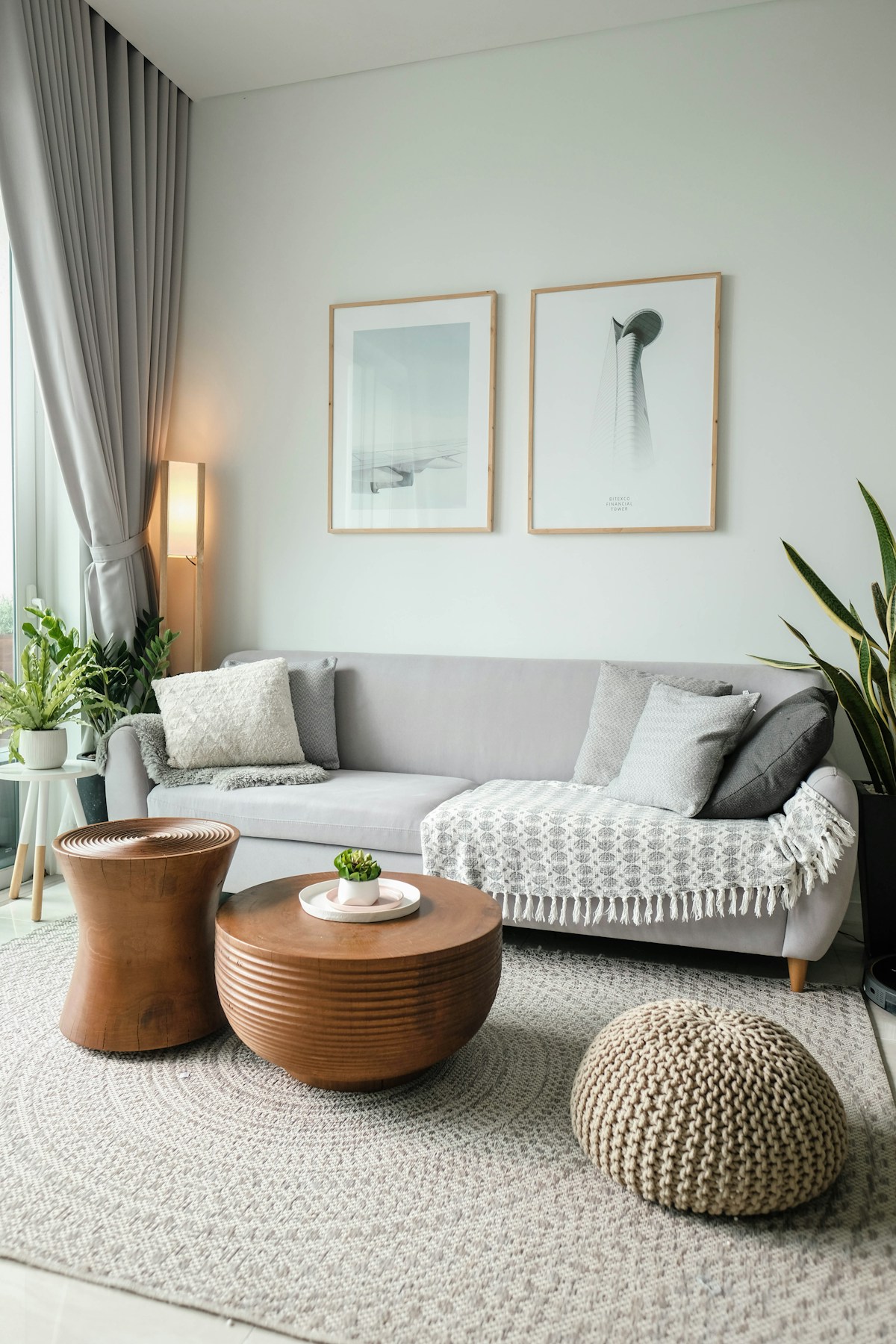
Every interior designer has a portfolio. Most of them look good. That is precisely the problem — a photograph of a beautiful room tells you very little about whether the designer is right for your home, your budget, or your timeline.
What you actually need to know is rarely in the portfolio. Was that stunning living room done for ₹8 lakhs or ₹40 lakhs? Did the project take 3 months or 9 months? Was it a 2BHK in Kothrud or a villa in Alibaug? Did the client hire them again? Was the final cost close to the original quote?
These are the questions that determine whether a designer is right for you — and almost none of them are answered by the curated grid of beautiful photos that every designer presents as their portfolio. You are being shown the best version of their work, with none of the context that would help you decide whether it's relevant to your situation.
Pricing is almost
impossible to compare.
Ask ten interior designers in the same city for a quote on a 2BHK, and you will get ten numbers that are impossible to compare with each other. One charges per square foot. One charges a percentage of the project cost. One charges a fixed fee for design and a separate rate for execution. One gives you an "all-inclusive" number that you later discover means something entirely different from what you assumed.
This opacity is not always deliberate — pricing in interior design is genuinely complex because no two projects are the same. But for a homeowner without industry knowledge, it creates a situation where you cannot tell whether you are being quoted fairly, whether one designer is dramatically more expensive than another, or whether the cheapest quote is cheap because something important has been left out.
The anxiety this creates is significant. Many homeowners end up choosing the designer who communicates most clearly about pricing — not the one whose work is best suited to their home.
Pricing confusion is the single most common reason homeowners abandon the search and delay starting their project — sometimes by months.
You cannot verify quality
before signing.
A home renovation is a high-stakes, long-duration commitment. You are trusting someone with your home for several months, handing over significant money in instalments, and living with the result for years. The stakes of getting it wrong are high — not just financially, but in terms of disruption, stress, and the time you will never get back.
And yet the only verification most homeowners can do before signing is: look at the photos, ask a few questions, and hope for the best. There is no equivalent of the bar exam, the medical licence, or the certified accountant's stamp that tells you this person has met a minimum standard of competence.
References help — but designers naturally give you the names of their happiest clients. Online reviews barely exist for most designers. And by the time you discover that a designer's project management is unreliable, or that their carpenters deliver poor finishing, you are already months into a project with money already paid.

Referrals are biased
and geographically narrow.
The most trusted way most people find an interior designer is through a referral from someone they know. This feels safe — and for good reason. A friend who has worked with a designer can tell you things that no portfolio can: how they handled a problem, whether they were honest when something went wrong, whether they'd hire them again.
But referrals have real limits. Your friend's designer may do excellent work in a style that is nothing like what you want. The designer who did a beautiful Scandinavian apartment for your colleague may have no experience with the warmer, layered aesthetic you have in mind. And because most people only know one or two designers from personal experience, you are working from a sample size of one.
There is also a subtler problem: most people only refer designers they genuinely liked — which means the many excellent designers who do quiet, solid work without the social presence to generate referrals simply never come up in these conversations. The best designer for your home may be someone whose name has simply never reached you.
Social media rewards visibility,
not skill.
Instagram has become the default portfolio for interior designers in India. And in many ways it makes sense — the work is visual, the platform is image-first, and a well-maintained account can communicate a designer's aesthetic immediately.
But Instagram's algorithm does not reward craft. It rewards consistency, engagement, and the kind of content that performs well on a social feed — which is not always the same as the kind of work that will make your home extraordinary. A designer with 50,000 followers may have grown that audience through reels, tips content, and trend-chasing. A designer with 800 followers may have spent the last decade building genuinely exceptional homes in your city that simply never made it to a wider audience.
When you search Instagram for an interior designer, you are not finding the best designers. You are finding the designers who are best at Instagram. These are related skills — but they are not the same skill. And building your shortlist from Instagram alone means you are very likely missing the most relevant designers for your home.
Some of the best interior designers in India have fewer than 2,000 Instagram followers. Their work speaks — but only to the people who already know to look for it.
The first conversation
is a leap of faith.
Even after you have narrowed your list — after the portfolio browsing, the referral calls, the DMs sent and half-answered — the moment you agree to move forward with a designer is still, fundamentally, a leap of faith.
You do not know how they will handle a difficult sub-contractor. You do not know how they will behave when the timeline slips. You do not know whether the vision they described in your first meeting is the vision they will execute three months later. You are making a decision of significant consequence based on a few conversations and some photographs.
This is not a problem that can be completely solved — trust is always involved in any significant working relationship. But the information available to make that leap smaller, more grounded, and less risky is far less than it should be. And until that changes, finding the right interior designer will continue to feel harder than it ought to.
This is the problem
we're building against.
The Beige Club connects homeowners with verified interior designers through real portfolio work — location-tagged, budget-transparent, and reviewed before going live. No Instagram algorithm. No blind referrals. Just the right designer for your home.